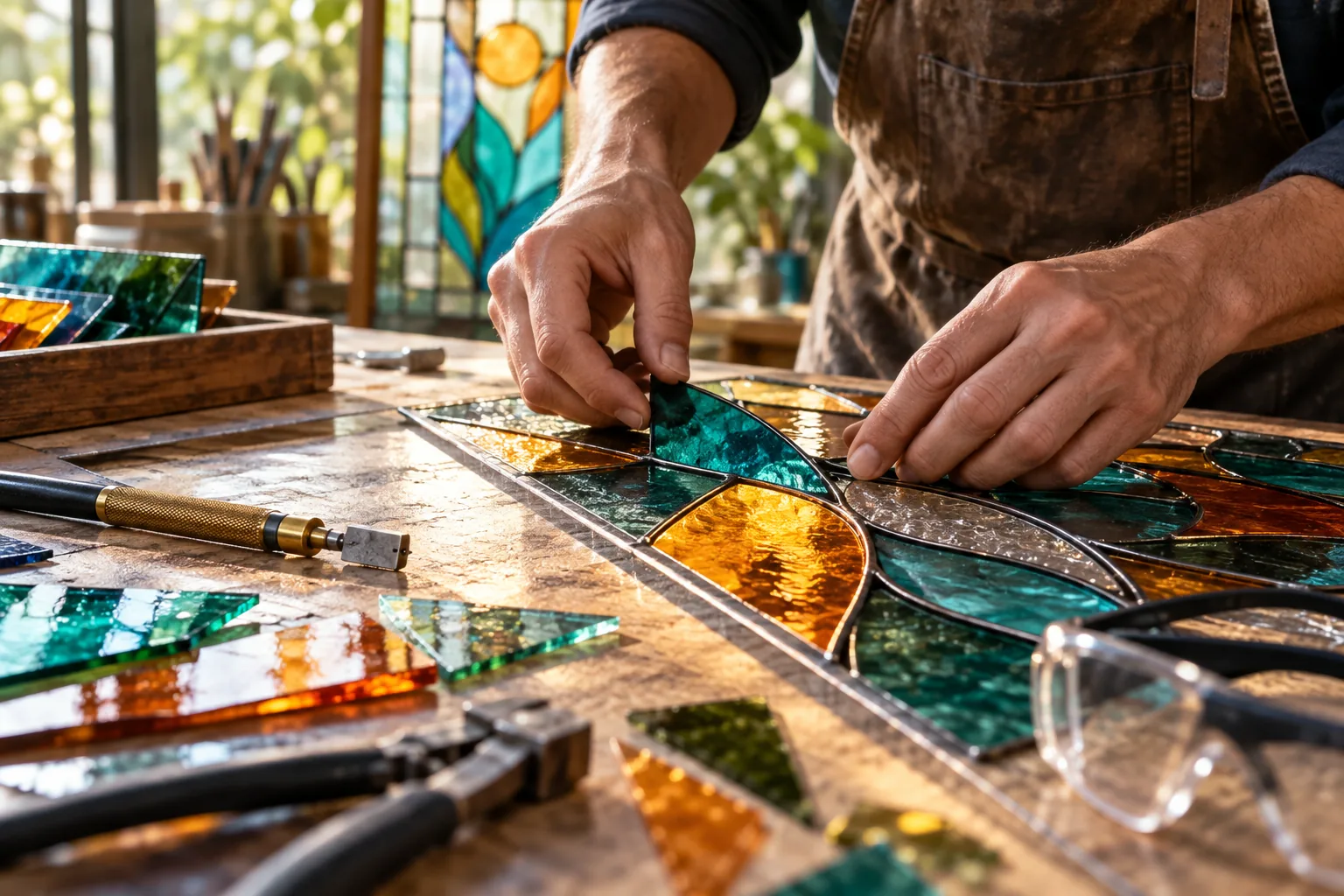
Decide which glass technique you actually want to learn before you start comparing prices. Making a copper-foil stained-glass panel, arranging glass for a kiln, or shaping molten glass are completely different activities. They require different equipment and teaching styles. A photo of a finished object doesn't tell you much about how much of the labor you'll actually do yourself.
Three useful starting points
| Technique | What to investigate | What happens after class |
|---|---|---|
| Stained glass | Cutting, fitting, grinding and joining pieces | Ask whether finishing is completed during the session |
| Glass fusing | Designing and arranging glass for a kiln | Kiln processing and later collection may be required |
| Hot glass or flameworking | The specific shaping technique and supervised participation | Ask about cooling, finishing and collection |
These are broad categories, not a guarantee that every intro class covers every single step. A short "experience" session might use pre-cut pieces or have the instructor handle the more difficult parts. That is fine if that's what you want, but make sure it matches your expectations.
Vancouver providers to compare
Awesome Sauce Designs offers stained-glass and fused-glass workshops in Vancouver. If you are a beginner, look closely at the specific project, how long the session lasts, and how much prep work is already done for you. If your goal is to eventually work independently, ask if the class teaches the full process or if it just focuses on finishing one specific design.
Terminal City Glass covers glassblowing, flameworking, and beadmaking. Their calendar has everything from quick experiences to skills courses, so a single "glass class price" is a misleading way to look at it. Check the specific date you want and compare the session length, technique, materials, and the total fee.
If you are looking on the North Shore, Bella Ceramica Studio in West Vancouver does glass fusing. Don't assume their pottery-painting rules apply to glass; check the specific project and age requirements for the glass work. You can also browse the glass arts directory to see other current options.
Check what the fee buys
Don't just look at the headline price. Ask if that amount includes the glass, specialist materials, tool use, kiln time, finishing, and tax. The size of the project or adding extra pieces can change the cost. For multi-session courses, find out if materials are included in the price or if you'll need to buy them separately after your intro session.
If your project needs to go in a kiln or needs time to cool, ask about the collection window and storage policy. Find out if someone else can pick it up for you. This is important if you are coming from the Fraser Valley; a single class might require a second trip to pick up your work. Do not promise a finished gift to someone by a certain date unless the studio confirms they can meet that turnaround.
Choose instruction and conditions that fit
Tell the studio your experience level and any specific access needs you have. Ask about things like standing time, workbench height, ventilation, and what kind of protective gear they provide. Also, follow their rules regarding clothing and footwear. Hot-glass work and soldering are not the same kind of environment, even though they both fall under "glass arts."
If you are booking for a child or teenager, check the age requirements for that specific class. A studio that offers family activities might still have restrictions on certain techniques. For group bookings, check if everyone gets their own tools or if participants have to share.
After the first class
If you decide you want to keep going, ask which courses build on your first lesson and if you need a new orientation or a membership to get practice time. Before you go out and buy your own equipment, figure out which parts of the process you can actually do in your own home workspace. A studio course is a great way to decide if you prefer design and assembly, detailed beadwork, or the physical intensity of shaping hot glass.