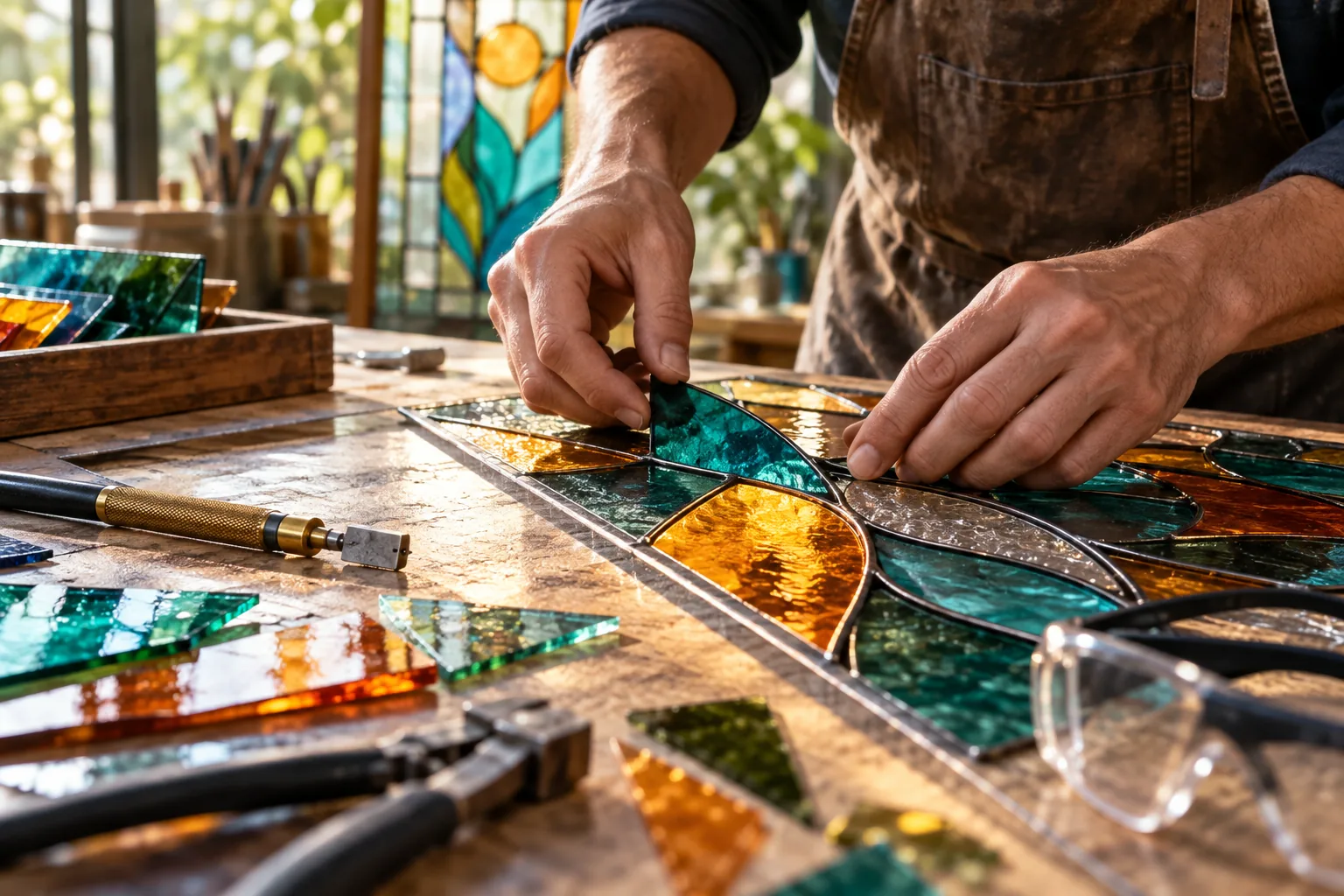
Glass fusing and glassblowing both use extreme heat, but the actual experience of doing them is very different. In fusing, you arrange compatible pieces of glass that get fired in a kiln later. In glassblowing, you are working with molten, moving glass in a hot shop, usually with a lot of help from an instructor. You should choose based on the process you actually want to experience, not just what the finished object looks like.
Fusing is designed before it is fired
A fusing workshop is usually about color, composition, and arranging cut glass on a base. Before you book, ask who does the cutting, if you get to use the tools yourself, and if the project gets slumped over a mold to create a 3D shape. The actual kiln work happens after the class is over under studio control.
Awesome Sauce Designs offers fused-glass and stained-glass workshops at MakerLabs in Vancouver. Bella Ceramica Studio in West Vancouver offers glass-fusing activities, but keep in mind that fired pieces normally require a later collection. Always confirm the current project, how long the firing takes, and the pickup window before you pay.
Fusing is a good fit if you enjoy selecting and placing colors and don't mind waiting to see the final result. It is generally calmer than a hot shop, but you still have to follow instructor rules regarding sharp edges, tools, and kiln safety.
Glassblowing is an assisted hot-shop process
Glassblowing involves working with hot, moving material. In a beginner experience, you might select colors, turn a pipe, shape things with tools, or blow glass, but the instructor will likely handle the gathering or other critical steps. You need to ask exactly what you will be doing with your own hands.
Terminal City Glass in Vancouver offers glassblowing as well as flameworking and beadmaking instruction. Keep in mind that a demonstration, an assisted experience, and a multi-session skills course are not the same thing. Confirm the specific format you are booking, the class size, and how much individual furnace time is included.
Compare physical and sensory demands
You should ask about the heat, how much standing is required, the level of hand control needed, eye protection, and what kind of clothing or footwear you need. Hot shops are bright, warm, and high-activity environments. Fusing studios often involve small, fine glass pieces and detailed hand work. If you have specific mobility, fatigue, or sensory needs, describe them before you pay to see what can be adapted safely.
Neither process is universally accessible. The specific room, your workstation, and the project itself will determine if it is suitable for you.
Expect later collection
Both processes usually require a controlled cooling period or kiln firing after your actual session. Ask when the work will be ready, if they offer shipping, how long they can store it, and what happens if the firing process changes or damages your piece. If you are traveling from Burnaby or further away, make sure you account for a second trip in your schedule.
Ask five decisive questions
Before you commit, ask these five things: 1. What do I do with my own hands? 2. What does the instructor do? 3. What specific object am I making? 4. What clothing is required? 5. When can I collect the work?
Choose fusing if you want to focus on design and kiln transformation. Choose blowing if you want the hot-shop experience and highly guided shaping. The best beginner workshop is the one where the participation level and the limitations are clear before you show up.
Compare cost only after the format matches
Don't judge a short assisted hot-shop experience against a long skills class based on the headline price alone. Ask how many people share an instructor and equipment, if materials are included, and how much active time you get per person.
For fusing, confirm the size and number of pieces included plus the firing. For blowing, confirm whether the booking is per person or per shared workstation. You should add the cost of return travel or shipping before deciding which experience offers the best value.