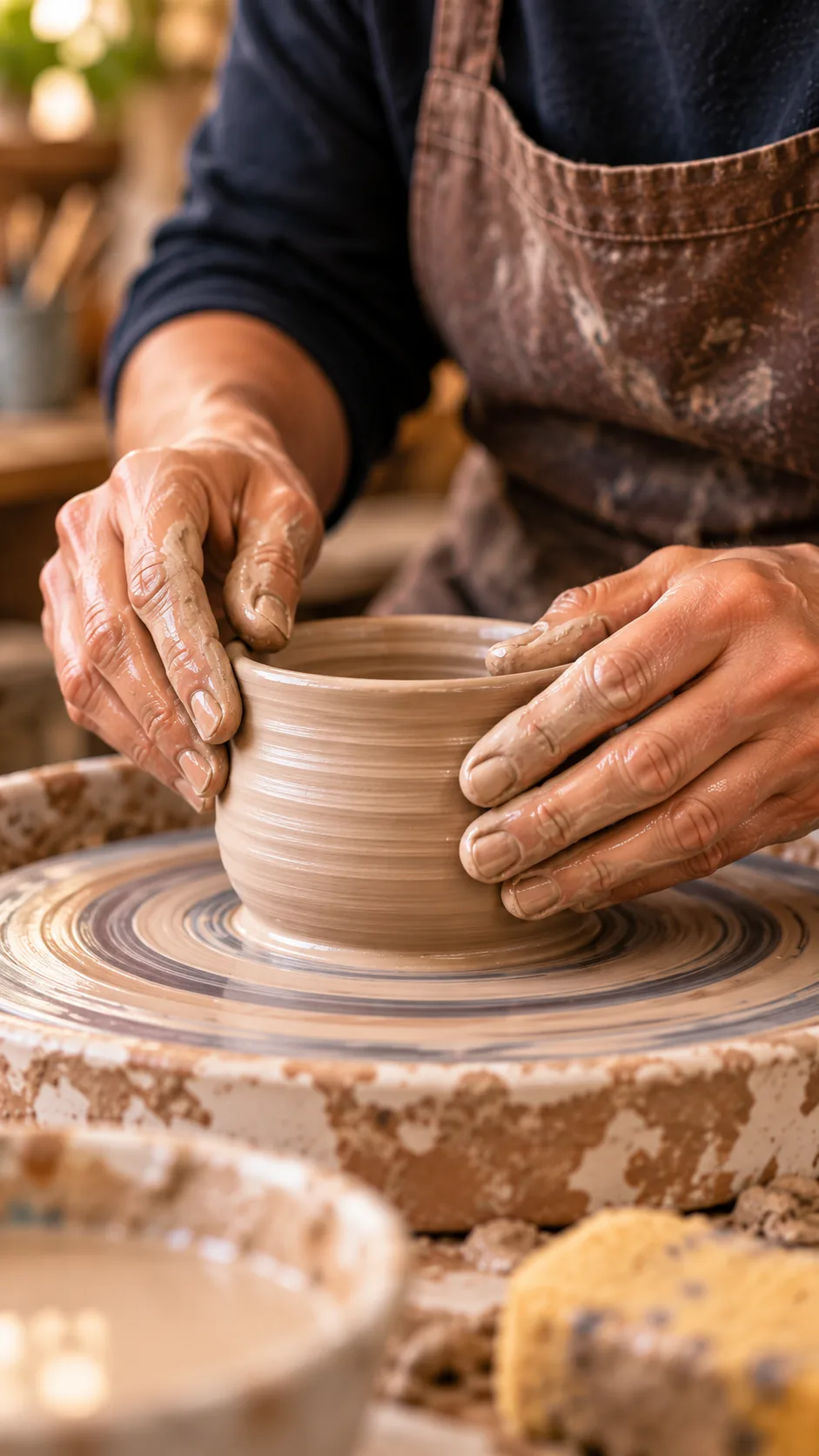
Pottery listings often look identical until you actually see what happens at the workbench. Wheel throwing, handbuilding, one-day tasters, and multi-week courses all demand different skills and result in very different types of progress. You should compare the actual process before you start comparing studio names or cities.
Wheel throwing: repetition is the real project
On a wheel, you are learning to centre moving clay and shape it while it spins. While the symmetrical bowl or cup is the goal, your first lesson is usually about coordination, pressure, and learning how to recover when the clay moves off centre. A short workshop can be a satisfying introduction, but it won't provide the repeated practice that a full course offers.
Ask the studio how much actual wheel time each person gets, whether everyone has their own station, which pieces you get to keep, and who handles the trimming and glazing later. If you have concerns about pedals or seated positions, ask about the specific wheel setup before you book.
Handbuilding: form clay without the spinning equipment
Handbuilding uses techniques like pinching, coils, and slabs. This approach suits people who want to create sculptural or less symmetrical forms, or groups that prefer working around a table rather than individual stations. It is still a technical process; joins need care, walls need support, and your project must be designed to survive drying and firing.
Check if the class teaches a specific method or simply leads everyone through making one single object. Also, confirm that handbuilding is actually currently offered. A historic listing or a studio known for several methods isn't proof that every method is on their current calendar.
One session versus a course
A taster concentrates the entire experience into a single booking. Often, the provider will complete the later stages of the process after you leave. A course is different; it connects forming, trimming, and glazing, and it might include practice time between meetings. The trade-off is a repeated commitment to travel and attendance.
Dodream Ceramic Studio in New Westminster distinguishes its one-day beginner experience from its six-week wheel course, drop-in making or painting, and group events. That menu is a good example of why the format name matters.
Clayground Ceramics Studio in South Surrey lists introductory wheel and handbuilding workshops alongside longer classes. These formats provide a local comparison between just trying a method and studying it over time.
Stablehands Pottery is an option for wheel throwing in Abbotsford. Their official site notes that handbuilding classes are not currently offered, so choose them for the wheel programme rather than an older description of a broader range of activities.
Compare what happens after the wet work
You need to know what happens once the clay dries. Ask whether you return to trim or glaze your work, whether you select a glaze for the staff to apply, or if you receive a studio-selected finish. Confirm the details on clay allowances, how many pieces you get to keep, firing charges, and the collection process. Projects can crack or change during drying and firing, so ask how the studio handles an unsuccessful piece.
Logistics matter, too. Someone in Burnaby might be fine with a one-off trip to Surrey, New Westminster, or Vancouver, but for a six-week course of evening meetings, you'll want a route that remains manageable after a workday.
Use a simple decision rule
Choose wheel throwing if the spinning process is your main attraction. Choose handbuilding if you want to work at a table and explore less symmetrical shapes. Choose a taster if you want one guided experience, and choose a course if you want to learn the full workflow and practice between lessons.
Once you decide, compare only like with like: inclusions, teaching time, number of visits, access needs, and travel. The creative class directory and area pages can help you find the relevant local choices once you have settled on a method.