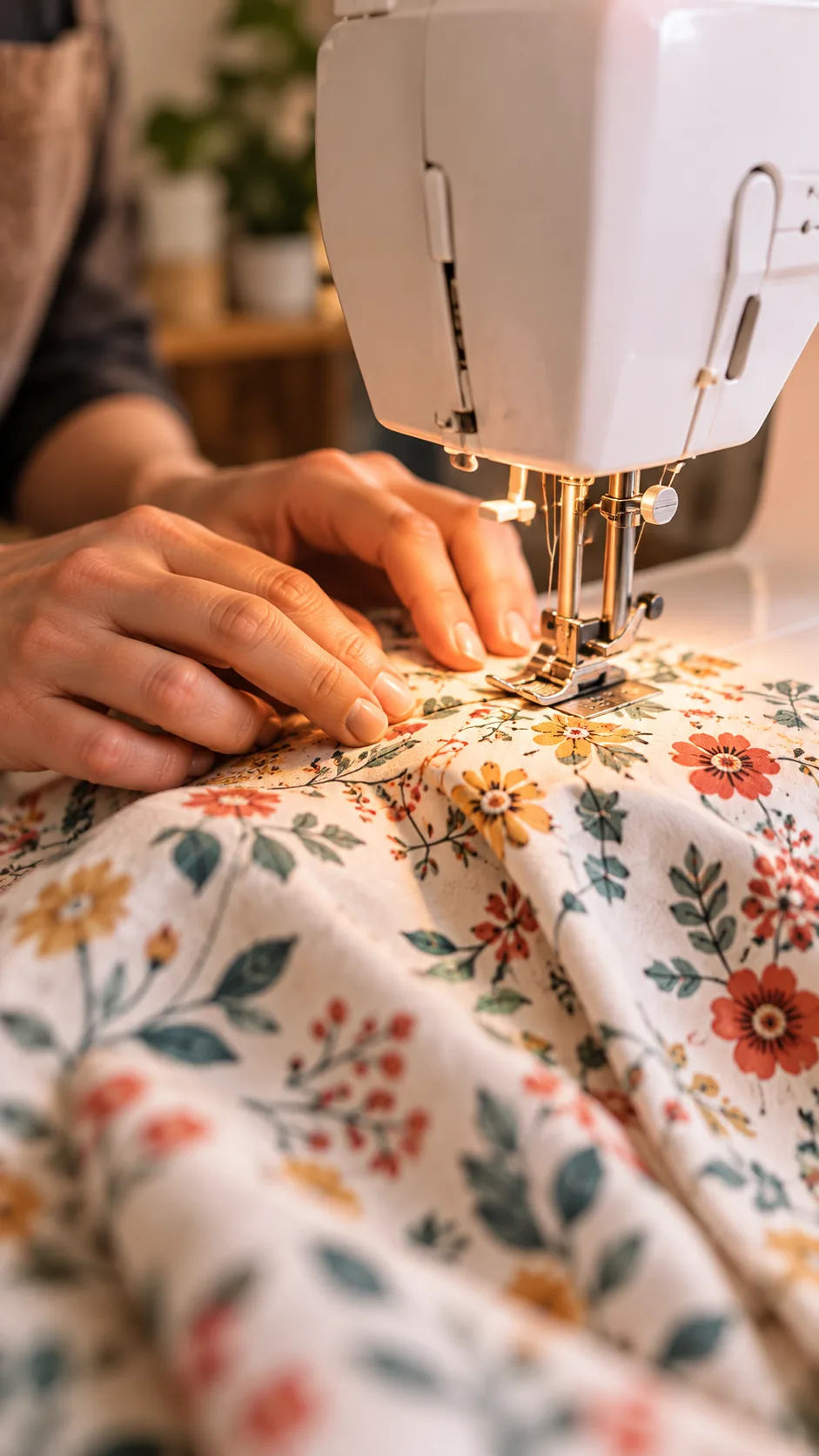
A good beginner sewing class should do more than just help you finish one tidy project. It should teach you how to set up a machine, how to control the fabric, and how to fix mistakes without feeling completely lost. In British Columbia, your choice usually comes down to the format and the commute: a one-time workshop in Vancouver might be an easy way to test the waters, while a multi-week course in Richmond, Surrey, Langley, or Port Coquitlam gives you the time needed to actually repeat and master each skill.
The first lesson starts before the first seam
If you are an absolute beginner, the first lesson is usually about the machine itself. You'll need to learn how to wind a bobbin, thread the upper path, raise the presser foot, and pick a basic stitch. You should also learn how to guide fabric without pulling it. You will likely practice on scraps before you touch your actual project fabric. At this stage, learning how to reverse, pivot at a corner, and keep a consistent seam allowance is much more important than sewing quickly.
The term “beginner” means different things to different studios. One class might assume you have never even switched on a machine, while another might expect you to thread it independently and know how to read a commercial pattern. Don't rely on self-ratings like "beginner level." Instead, be specific when asking about prerequisites. Tell the instructor: “I have never used a machine” or “I can sew a straight seam but cannot read a pattern.” It gives them a much better starting point.
Project workshop or foundation course?
A short project workshop is a good low-commitment way to start. Making a tote or a pouch introduces straight seams, corners, and basic construction in a predictable way. The tradeoff here is that instructors often pre-cut some pieces so the group can finish everything in a single session.
A multi-session foundation course offers more depth. You'll have time for pattern layout, grain direction, accurate cutting, seam finishes, and fitting. If you want to sew clothes, the foundation course is the better choice because a wearable project introduces measurements and fabric behavior that a simple accessory just doesn't cover. Before you sign up, ask what the final result will be, which parts the students do themselves, and what you should be able to do on your own once the class ends.
Equipment and materials vary by studio
Don't buy a sewing machine just because a class title says “sewing basics.” Some studios provide the machines and core tools, while others expect you to bring your own. Using a studio machine is a great way to reduce your first-day workload, but using your own machine allows the instructor to help you understand your specific controls and accessories.
You need to confirm whether the class supplies the fabric, thread, needles, pins, scissors, and patterns. If you are buying your own fabric, ask for the exact fiber, weight, and amount required. A stable woven cotton is much easier to control than something slippery or highly stretchy, but you should follow the instructor's specific project requirements. Also, check if the fabric needs to be washed, dried, pressed, or cut before you arrive.
Choose a trip you can repeat
If you are doing a single workshop, traveling across Metro Vancouver is probably fine. If you are committing to a six-week course, a difficult evening commute might be the reason you miss a practice session.
Richmond learners can look into Winnie Sewing Studio, which offers adult classes. Vancouver learners can compare La Movida Sewing & Design Studio, which hosts adult courses and introductory workshops in an equipped studio.
In Langley, La Couture Sewing School offers beginner-friendly sewing and pattern-making. Mae Design Studio (Mae Studio) in Port Coquitlam provides sewing courses, project-based classes, and pattern-drafting instruction. Sew Me Studio in South Surrey offers private, semi-private, and group formats; keep in mind that machine and supply requirements can vary depending on the specific class you choose.
A useful outcome for day one
Success isn't just about leaving with a finished object. By the end of a solid first class, you should understand the machine’s basic controls, be able to sew a test seam, know when to stop and rethread, and have a clear idea of what to practice next. Ask if you can take notes or photograph your machine settings, and make sure to write down the specific needle, thread, and stitch used for your project. Those small details are what turn a single class into a skill you can actually use at home.